
Márta Berkesi

Márta Berkesi
MTA – HUN-REN FI FluidsByDepth Lendület (Momentum) Research Group, HUN-REN Institute of Earth Physics and Space Science, Sopron, Hungary
Márta Berkesi earned her degree in geology in 2007 from Eötvös Loránd University in Budapest, Hungary. In 2011, she completed her PhD, investigating mantle and CO2–H2O fluids under lithospheric mantle conditions through a collaborative effort between Eötvös Loránd University and the Université de Lorraine in France. She subsequently worked as a postdoctoral researcher at the CNRS in Nancy (GeoRessources Laboratoire), France, and at Eötvös Loránd University in Budapest. Since 2021, she has been working at the HUN-REN Institute of Earth Physics and Space Science. Márta has received three postdoctoral research grants funded by the Hungarian State and currently leads the Momentum FluidsByDepth Research Group, sponsored by the Hungarian Academy of Sciences. Márta served as Chair of the Organizing Committee for the prestigious ECROFI (European Current Research on Fluid Inclusions) meeting in 2019, which focuses on fluid inclusion studies. She is an elected Council Member of the European Association of Geochemistry (EAG), a member of the Young Academy of Europe, and a member of the ECROFI Scientific Committee. Her research focuses on mantle fluids and degassing, subduction-related fluids, and the Raman spectroscopic investigation of fluid inclusions.
Geologic CO2 Accumulation, Storage, and Cycling in the Lithospheric Mantle and Lower Crust: Insights from the Pannonian Basin
The subcontinental lithospheric mantle and lower continental crust represent distinct but geodynamically connected reservoirs that control the accumulation, storage, and migration of mantle-derived CO2. During post-rift lithospheric thickening, carbon-rich fluids and low-degree melts can become incorporated into the newly formed lithospheric mantle, creating a spatially extensive and long-lived carbon reservoir. Mantle-derived CO2 can subsequently migrate across the Moho and become stored in the lower crust, particularly within garnet, graphite, and accessory minerals, allowing carbon to remain trapped for millions of years before being released. Evidence from the Pannonian Basin therefore suggests a multistage carbon (fluid) pathway—from asthenospheric accumulation through storage in the mantle and lower crust to eventual transport into groundwater or to the surface—rather than direct mantle-to-surface degassing. Isotopic signatures and potential fluid pathways, such as nanochannels, deep faults, former volcanic conduits, and deformation zones, further demonstrate how these deep reservoirs can remain connected to present-day crustal and surface carbon systems.
Nicholas Dygert

Nicholas Dygert
Department of Earth, Environmental and Planetary Sciences, University of Tennessee, USA
Nicholas Dygert is the Lawrence and Dawn Taylor Associate Professor at the University of Tennessee. He is an experimentalist and geochemist and researches the formation and evolution of planets including the Earth and Moon, with a focus on interior processes. Nicholas holds a PhD from Brown University. He serves as an Associate Editor for Geochimica et Cosmochimica Acta, and in his home department, as Director of Graduate Studies and PI of the University of Tennessee NASA Space Grant Consortium.
Insights into mantle processes from trace element partitioning experiments
Chemical signals of planetary interior processes are recorded by igneous rocks and can be decoded in the context of experimental constraints on trace element partitioning behavior. This talk reviews some advances in understanding the temperature, composition, and oxygen fugacity sensitivity of rare earth element partitioning between rock forming minerals and coexisting melts, and among minerals under subsolidus conditions. Applications to natural samples reveal mechanisms of cooling beneath seafloor spreading centers, rheological properties of dynamical instabilities in Earth’s lithosphere, magmatic controls on oxygen fugacity, and provide first order constraints on the nature of lunar differentiation and the mineralogy and composition of lunar basalt sources.
Dániel Kalmár

Dániel Kalmár
Kövesligethy Radó Seismological Observatory, HUN-REN Institute of Earth Physics and Space Science, Budapest, Hungary
Dániel Kalmár is Head of the Kövesligethy Radó Seismological Observatory at the HUN-REN Institute of Earth Physics and Space Science in Budapest. His research focuses on seismic imaging of the crust, lithosphere, and upper mantle, with particular emphasis on receiver function analysis and the geodynamic evolution of the Pannonian Basin and the surrounding Alpine–Carpathian–Dinarides region. He received his PhD in Earth Sciences from Eötvös Loránd University in 2021, with a thesis focusing on crustal structure in the wider Pannonian Basin using P receiver functions. He has been involved in major European seismological initiatives, including AlpArray and AdriaArray, and currently leads research activities on lithospheric structure and seismic anisotropy in the Circum-Pannonian region. He is also a Hungarian delegate to the European Seismological Commission (ESC) and the International Association of Seismology and Physics of the Earth’s Interior (IASPEI).
The Lithospheric and Upper Mantle Structure of the Circum-Pannonian Region: Insights from Receiver Functions
The Circum-Pannonian region provides an exceptional natural laboratory for investigating the structure and evolution of continental lithosphere, with the Pannonian Basin surrounded by the Eastern Alps, Carpathians, and Dinarides. In this talk, new constraints on the lithosphere, with particular attention to the upper-mantle structure of the region, based on P-to-S and S-to-P receiver function analysis, will be presented. The study combines broadband seismic data from more than 860 permanent and temporary stations, spanning two decades of observations. Through rigorous quality control and advanced receiver function processing, we develop high-resolution maps of sediment thickness, crustal discontinuities, Moho depth, lithospheric thickness, and the Lithosphere–Asthenosphere Boundary (LAB). The results reveal pronounced lateral variations in crustal and lithospheric structure, ranging from the thin lithosphere beneath the Pannonian Basin to substantially thicker lithosphere beneath the surrounding orogenic belts.
Receiver functions also provide new constraints on the structure of the mantle transition zone, including the ~410 and ~660 km discontinuities. Combined with seismic tomography, these observations reveal complex mantle structures associated with past and ongoing subduction, mantle upwelling, and the long-term geodynamic evolution of the Alpine–Carpathian–Pannonian–Dinarides region.
These results provide a coherent seismic view extending from the crust to the mantle transition zone and highlight the role of lithospheric structure in controlling the present-day geodynamic evolution of the Circum-Pannonian region.
Jingao Liu
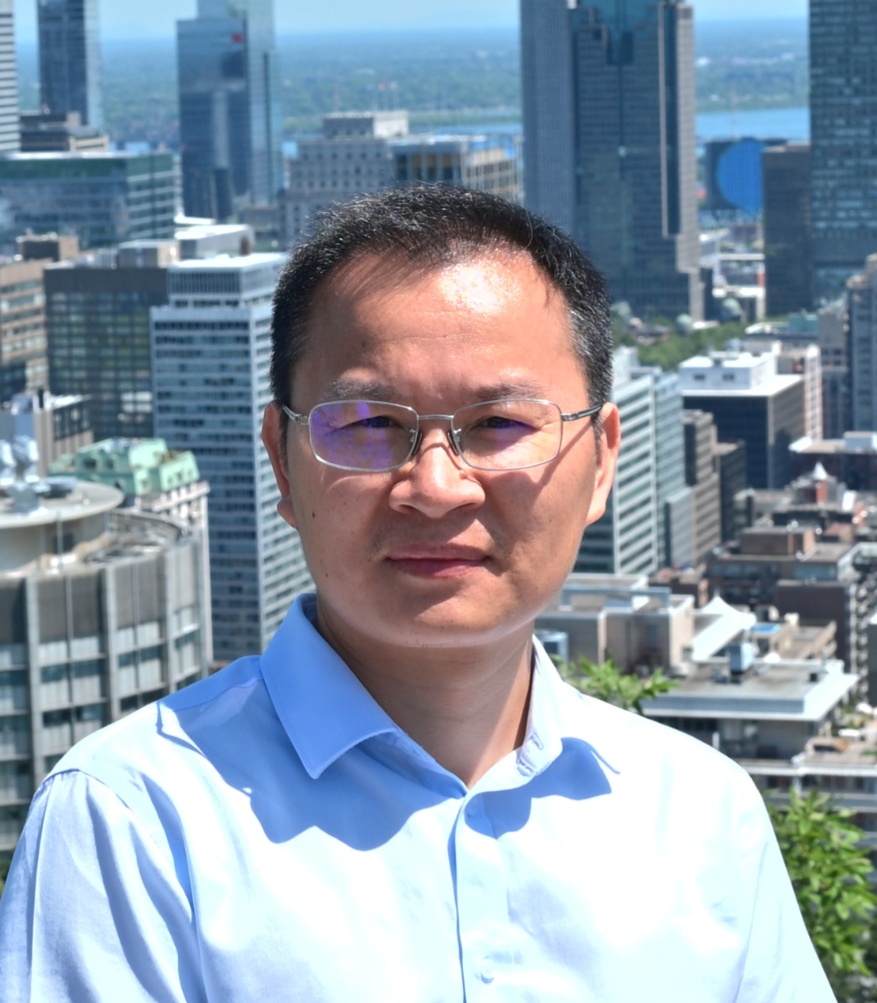
Jingao Liu
Institute of Earth Sciences, China University of Geosciences (Beijing), China
Jingao Liu is a professor at the China University of Geosciences (Beijing). His research focuses on the formation and evolution of terrestrial planets using high-temperature geochemistry and cosmochemistry. This has led to research on the accretion and differentiation of Earth, the Moon and other planetesimals, and formation and evolution of Earth’s continents particularly in the perspective of lithospheric mantle and associated processes. Jingao received his PhD from University of Maryland-College Park, and he serves as an Associate Editor for Geochimica et Cosmochimica Acta and as a member of the Geoscience Editorial Team for National Science Review.
The dynamic life cycle of cratons: origin, destruction, and recratonization
Cratons are Earth’s ancient continental nuclei, preserving planetary evolution records and hosting major mineral resources. Their origin remains debated, involving vertical plume accretion, lateral subduction-accretion, or combined plume-sagduction. Although generally stable, some cratons – such as the eastern North China Craton – experienced severe lithospheric thinning and destruction. Mantle xenoliths record a transition from a thick, refractory Archean–Paleoproterozoic root in the Paleozoic to thin, fertile oceanic-type mantle by the Cenozoic, peaking at 120–130 Ma. This destruction was mainly driven by Paleo-Pacific slab subduction, involving flat subduction, rollback, thinning, and replacement. Comparison with the South China Craton indicates that prolonged pre-weakening (>500 Myr) is a critical precursor, explaining the rarity of global craton destruction. Mantle plumes also drive thinning and correlate with mass extinctions and large igneous provinces, yet most cratons survive. This paradox is resolved by recratonization – post-plume root re-stabilization – as in the Slave craton after the 1.27 Ga Mackenzie event, and inferred for Kaapvaal and Tarim. Plumes may also weld terrains into refractory roots. Craton evolution is thus governed by destructive and restorative processes. This talk will comprehensively cover the dynamic life cycle of cratons.
Davide Novella
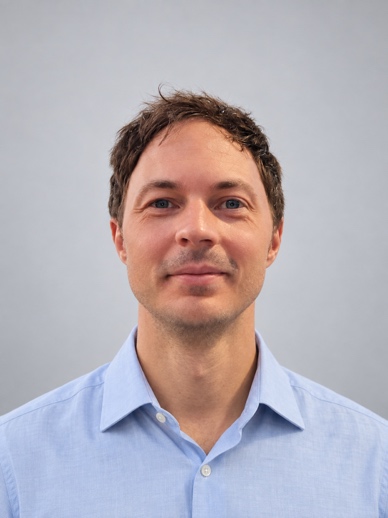
Davide Novella
Department of Geosciences, University of Padova (Italy)
I am interested in the composition and evolution of the deep Earth. My research combines high-pressure and high-temperature experiments with the study of natural samples from the deep mantle including diamonds and their mineral inclusions. I completed my Ph.D. at the Bayerisches Geoinstitut, University of Bayreuth, Germany, in 2013, and subsequently held postdoctoral positions in France, the United States, the United Kingdom, and Italy. Since 2013, I have been an Associate Professor of Geochemistry in the Department of Geosciences at the University of Padova, Italy.
Tracing hydrogen in the deep mantle through mineral inclusions in diamonds
Water is the dominant volatile in the mantle, where H can be incorporated into nominally anhydrous minerals in quantities potentially equivalent to several oceans. Even at concentrations of only a few parts per million by weight, H strongly influences mantle properties, including melting temperature, seismic-wave propagation, and rheology, thereby affecting global geodynamics. Determining its abundance and distribution in the deep mantle is therefore essential for reconstructing Earth’s evolution and the development of its surface environment.
In this seminar, I will present recent measurements of H in nominally anhydrous minerals enclosed in natural diamonds from the lithospheric mantle. Although extremely rare, these inclusions provide a unique window into Earth’s inaccessible interior. Combined with experimental data and observations from mantle xenoliths, the results offer new insights into H in the deep mantle and the composition of C–O–H diamond-forming fluids.
Kristóf Porkoláb

Kristóf Porkoláb
MTA – HUN-REN FI FluidsByDepth Lendület (Momentum) Research Group, HUN-REN Institute of Earth Physics and Space Science, Sopron, Hungary
Kristóf Porkoláb gained his M.Sc. degree in Geology in 2016 at the Eötvös Loránd University (Budapest, Hungary). He completed his Ph.D. at Utrecht University (Netherlands) in 2021, which focused on integrating field-based structural analysis, metamorphic petrology, Ar/Ar dating, and numerical modeling to infer the characteristics of continental subduction-exhumation processes. Since obtaining his Ph.D., he has been working as a research fellow at the HUN-REN Institute of Earth Physics and Space Science (EPSS), Sopron, Hungary. His main research topics include active geodynamic processes in the Pannonian region, the thermo-mechanical behavior of the lithosphere, and interactions between deformation, phase transformations, and fluid flow.
Links between deformation and metamorphism: numerical models and an example from the Pannonian lithosphere
Deformation and metamorphism in the lithosphere are intrinsically connected. Tectonic processes induce petrological transformations, which in turn influence plate dynamics, the transport of fluids, and the nucleation of earthquakes. Hence, the understanding and prediction of this coupling between deformation and metamorphism is a key issue in geodynamic research. The talk will cover different models of deformation-metamorphism coupling: antigorite dehydration models, the spatial and temporal scales of phase transformations in deforming rocks, and the tectonic effects of garnet breakdown in the lower crust of the Pannonian Basin.